
Description
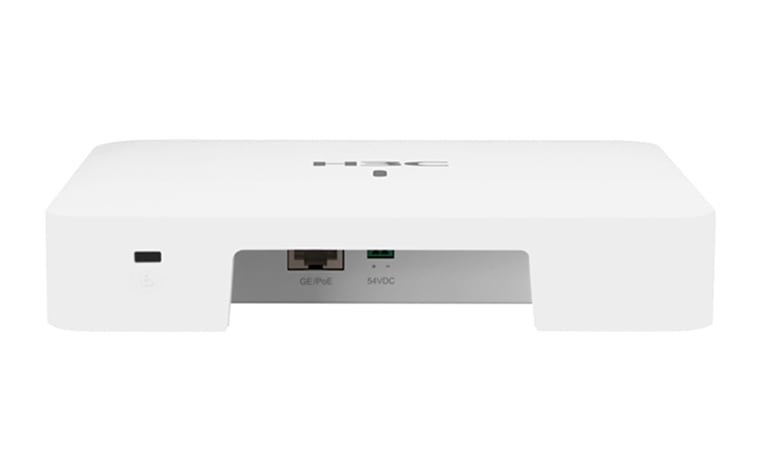
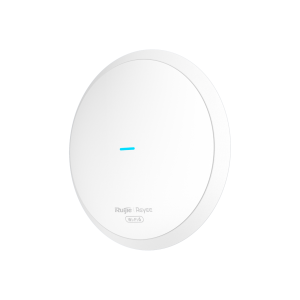
H3C WA6020
Indoor Dual-Radio Wi-Fi 6 (802.11ax) Access Point Features
1500 Mbps
2×2 : 2
100 Users
PoE 802.3af
Wi-Fi 6 (802.11ax) Standards
Orthogonal Frequency Division Multiple Access (OFDMA)
802.11ax uses OFDMA to allow multiple users to transmit data simultaneously. OFDMA splits a channel into sub-channels, known as resource units (RUs), with specific subcarriers, and assigns RUs to different users for simultaneous transmission. OFDMA enables simultaneous multi-user transmission and reduces latency caused by channel contention.
DL/UL MU-MIMO
DL/UL MU-MIMO technology allows AP to send data to multiple stations simultaneously, breaking through the traditional wireless serial communication mechanism, increasing the utilization rate of wireless spectrum resources, and improving the number of effective access users and access experience under high-density deployment.
BSS Coloring
Spatial reuse allows the access points and their clients to differentiate between BSSs, assigns a different color per BSS to help access point identify co-channel interference and stop transmission in time. This optimizes frequency reuse and improves network capacity.
Target Wake Time (TWT)
TWT improves power efficiency and reduces contention by increasing client sleep time and allowing negotiation of the times that clients can access the medium.
Innovative AI-Native Capabilities
The access point can realize AI-based radio frequency (RF) management, the connection of the terminal to the network, service assurance, and healing of the network through the convergence of cloud, networking and edge and H3C’s iRadio, iStation, iHeal, and iEdge technologies.
Security Policy
Wireless security guarantee
The APs support WPA2-Personal, WPA2-Enterprise, WPA3-Personal, WPA3-Enterprise authentication and encryption modes to ensure security of the wireless network.
Rogue Device Monitoring
APs support WIPS, and can monitor, identify, defend, counter, and perform refined management on the rogue devices, to provide security guarantees for air interface environment and wireless data transmission.
Link Protection
The CAPWAP link protection and DTLS encryption provide security assurance, improving data transmission security between the AP and the AC.
Network Optimization
Doctor AP
Doctor AP mode, combining H3C AC and H3C Cloudnet platform, collects wireless network information for scenarios where terminal access is abnormal, and analyzes and locates wireless faults quickly and accurately.
RRM
Radio Resource Management (RRM), the AP monitors air interface channel utilization, channel interference, and signal conflict in real time, and works with H3C Cloudnet to adjust RF parameters such as working channel, bandwidth, and power in a timely manner to maintain the optimal RF resource status.
RROP
Radio Resource Optimization Policy (RROP) refers to the collection of multiple wireless air interface optimization methods, which is committed to reducing or controlling the consumption of air interface media resources by management packets, broadcast packets, and invalid packets. Set aside more resources to provide users with better wireless application services.
SACP
The Station Access Control Policy (SACP) restricts, controls, and guides the access of wireless terminals to better AP or wireless services. In addition, terminal traffic is controlled and scheduled according to network applications to improve the overall performance of the wireless network and improve the experience and effect of wireless access applications.
Roaming Protection
Wireless AP fully supports the Fast BSS Transition function defined in the 802.11r standard, which can accelerate the roaming process of wireless users, reduce the probability of connection interruption, and improve the roaming service quality. Through 802.11k protocol mechanism, AP and wireless client interact with each other to perceive the network topology in multiple dimensions. The AC recognizes and calculates the roaming time and roaming access location of the wireless client in full view, and negotiates the switch with the client through 802.11v and 802.11r mechanisms.
Cellular Coexistence Feature (CCF)
The access point uses built-in software filtering to minimize the impact of interference from 3G/4G cellular networks.
Application Guarantee
Application identification
APs support smart application control technology and can implement visualized control on Layer 4 to Layer 7 applications. Coupled with H3C WLAN ACs, the APs can identify a large number of common applications in various office scenarios. Based on the identification results, policy control can be implemented on user services, including priority adjustment, scheduling, blocking, and rate limiting to ensure efficient bandwidth resource and improve quality of key services.
Flexible Networking
AC-based Management
The access point supports Fit AP mode and can be managed by the built-in AC functionality of WSG1800X series gateway, MSR610 router and F100-C Series firewall, providing centralized control and unified configuration for the whole wireless network.
Cloud-based Management
This access point supports cloud AP mode, which can be managed through the cloud without deploying wireless controllers and authentication servers. It supports multiple authentication methods such as PPSK, Portal and social media. At the same time, the cloud management platform can monitor the device status and terminal connection status, comprehensively evaluate and optimize the business operation status of the entire wireless network, and achieves the optimal wireless network Total Cost of Ownership (TCO).
Power Saving
The access point employs a green design that supports Dynamic and Static SM Power Saving (SMPS), Enhanced Automatic Power Save Delivery (E-APSD). It can dynamically adjust the MIMO working mode and efficiently put terminals to sleep.
The access point supports green AP mode that enables single radio standby and allows for more precise power control.

Reviews
There are no reviews yet.